


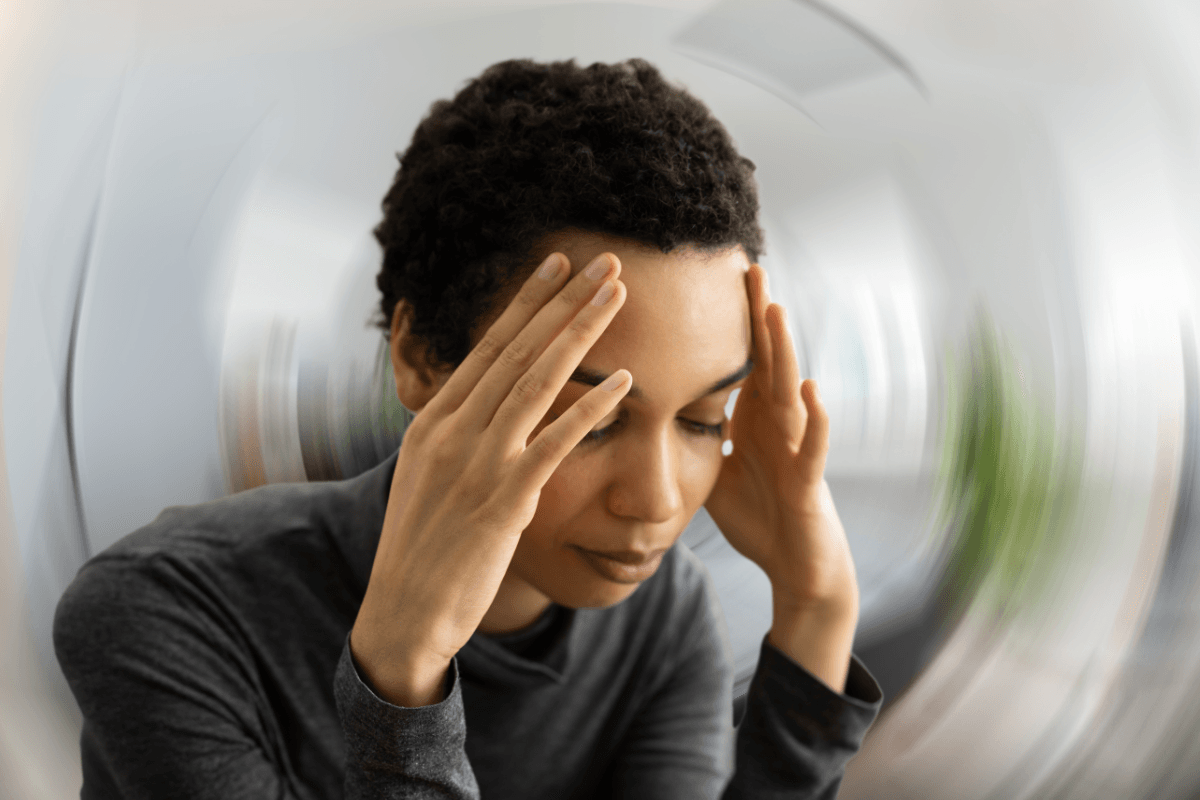

If you want to know how to get rid of dizziness fast, the safest first steps are to stop moving, sit or lie down, and look for the most likely trigger. Water may help if you are dehydrated, a light snack may help if you missed a meal, and slower movements can calm a spinning sensation. What matters most is matching relief to the pattern. Dizziness can also signal a more serious problem, especially if it starts with chest pain, fainting, trouble speaking, or one-sided weakness.
Dizziness is a symptom, not a single diagnosis. It can mean lightheadedness, feeling off balance, or vertigo, which is the false sense that you or the room are moving. That is why quick relief is possible in some cases, but not from one universal drink, pill, or home remedy.
Key Takeaways
- Stop what you are doing and lower your fall risk first.
- Water may help if dehydration or heat is the cause.
- A small snack may help when a missed meal is involved.
- Spinning sensations often point to inner-ear or vertigo problems.
- Get urgent care for chest pain, stroke signs, fainting, or severe weakness.
Video visits take place through a secure, HIPAA-compliant app.
How to Get Rid of Dizziness Fast Safely
The fastest safe response is to reduce fall risk first. As soon as dizziness starts, stop walking, stop driving, and avoid stairs or showers until you feel steady again. Sit down right away. If you feel like you might pass out, lying flat may help more than sitting upright.
Once you are safe, try a few simple steps that fit most short-lived episodes. These steps do not treat every cause, but they can help you stabilize while you decide what comes next.
- Stop and sit down.
- Lie flat if you feel faint.
- Focus on one fixed point.
- Take slow sips of water.
- Try a light snack if you skipped a meal.
- Avoid quick head turns.
- Stand slowly after symptoms ease.
Water is the best first drink when dehydration, overheating, illness, or exertion may be involved. If you also feel shaky, sweaty, hungry, or weak, a carbohydrate-containing snack or drink may help if low blood sugar is part of the problem. If nausea is present, small sips are often easier than a large glass at once. No single drink stops every type of dizziness.
There is also no single pill that removes all dizziness. Some medicines may help nausea or motion sensitivity in select situations, but the right treatment depends on the cause. Taking the wrong medicine can add drowsiness, increase fall risk, or mask symptoms that need proper evaluation.
If your symptoms started after a new medicine, do not assume the timing is a coincidence. Blood pressure medicines, sedating drugs, and some antidepressants can contribute to dizziness in some people. That does not mean you should stop them on your own, but it is a good reason to review the timing with a clinician.
Why it matters: Sudden dizziness raises the risk of falls, especially on stairs or in the shower.
What the Feeling May Be Telling You
The most common causes of dizziness fall into a few broad groups: inner-ear problems, fluid or blood pressure shifts, blood sugar changes, medication effects, and stress-related symptoms. Less often, dizziness can come from a neurologic or heart-related problem, which is why the symptom deserves context rather than guesswork.
Lightheadedness often points to dehydration, overheating, skipped meals, or orthostatic hypotension, which means a drop in blood pressure when standing. A spinning sensation often points to vertigo from the inner ear, including BPPV, or benign paroxysmal positional vertigo, which is triggered by head movement. Feeling unsteady or pulled to one side can come from the inner ear, weak vision cues, nerve issues, deconditioning, or some neurologic conditions.
Dizziness is also easy to misread. Inner-ear dizziness usually gets worse when you turn your head, roll in bed, or look up. Low blood sugar is more likely to come with hunger, sweating, shakiness, or irritability. Medication-related dizziness often starts after a new prescription or a dose change. Heat, diarrhea, or vomiting make dehydration much more likely. Keeping the timeline in mind often helps separate these patterns.
Common triggers overlap, so a simple pattern check helps more than guessing. For readers working on steady intake habits, our Benefits Of Hydration article covers practical ways to drink more consistently, and Blood Sugar Habits explains why skipped meals or glucose swings can leave you lightheaded.
| How it feels | What it may suggest | What may help first |
|---|---|---|
| Lightheaded after standing | Dehydration or orthostatic hypotension | Sit down, hydrate, rise slowly later |
| Room spinning with head movement | Vertigo or BPPV | Keep still, avoid sudden turns, get assessed if it keeps happening |
| Shaky, sweaty, hungry | Low blood sugar or long gaps without food | Take food or drink if you can swallow safely |
| Started after a new medicine | Possible medication side effect | Review the timing with a clinician |
| With palpitations, fainting, or chest symptoms | Possible heart-related cause | Seek urgent medical care |
Many people searching how to get rid of dizziness fast are really trying to sort out which kind of dizziness they have. That distinction matters, because spinning, faint-feeling, and balance problems do not all respond to the same steps.
Fast Relief Depends on the Pattern
The quickest relief usually comes from matching the step to the likely trigger. That may sound obvious, but it answers several common questions at once. The best drink depends on whether you are dehydrated. The best next step depends on whether you feel faint or feel the room spinning. And there is no universal dizziness pill because dizziness is not one disease.
If dehydration or a missed meal is most likely
If you have been in heat, exercising, vomiting, or simply not drinking enough, rest in a cool place and sip water slowly. If dizziness follows a skipped meal, eating something easy to tolerate may help. Small, steady meals often work better than long gaps. If irregular eating keeps causing symptoms, structured planning such as Virtual Nutrition Counseling may help you build more consistent routines.
If it happens when you stand up
Dizziness when standing up often improves by sitting back down, tightening your calf muscles, and rising more gradually once the feeling passes. Dehydration, prolonged bed rest, illness, and some blood pressure medicines can contribute. If this pattern keeps repeating, it is worth reviewing your fluid intake, recent illness, and medication list rather than treating each episode as random.
If the room seems to spin
A spinning feeling is more suggestive of vertigo. Move slowly, avoid sudden head turns, and do not drive until the sensation clears. BPPV may respond to clinician-guided repositioning maneuvers, while longer-lasting inner-ear problems may improve with vestibular rehabilitation, which is balance-focused physical therapy. For broader brain and balance topics, browse the Neurology Hub.
If stress or anxiety seems linked
Stress and anxiety can cause dizziness, but they can also intensify dizziness from other causes. After you rule out danger signs, quieter breathing, hydration, sleep, and reducing sensory overload may help. If nausea comes with the dizziness, small sips of fluid and bland food are usually easier to tolerate than a large meal. Still, it is best not to label every episode as anxiety without considering hydration, food intake, medications, and the rest of the symptom pattern.
Quick tip: Write down the trigger, timing, and any new medicines before the details fade.
Clinical decisions are made by the treating clinician after reviewing your symptoms.
When Dizziness Needs Urgent Medical Care
Dizziness is more urgent when it appears with neurologic symptoms, chest symptoms, or fainting. In those situations, the problem may be bigger than simple dehydration or an inner-ear flare.
- Face drooping, arm weakness, or trouble speaking
- New confusion, double vision, or a severe sudden headache
- Chest pain, chest pressure, or shortness of breath
- Fainting, collapse, or repeated near-fainting
- A racing or irregular heartbeat
- Persistent vomiting or signs of severe dehydration
- New hearing loss, trouble walking, or one-sided weakness
- Dizziness after a head injury
Dizziness with chest discomfort, breathlessness, or reduced exercise tolerance deserves prompt attention. Our overviews on Heart Disease Signs and Pulmonary Hypertension Signs explain broader warning patterns that should not be ignored.
Older adults may feel the effects of dizziness more quickly because even a brief episode can lead to a fall. Home safety steps, steady meals, and slower position changes matter even more in that setting. Our Senior Health Tips page covers practical ways to lower everyday risk.
How Clinicians Usually Evaluate Recurring Dizziness
Recurring dizziness usually needs a pattern-based evaluation, not a guess. One brief episode after heat or skipped meals may be straightforward. Repeated dizziness, morning dizziness, dizziness with hearing changes, or dizziness that keeps coming back without a clear trigger usually needs closer review.
A clinician will often ask what the sensation feels like, how long it lasts, whether head movement or standing triggers it, and what other symptoms show up at the same time. They may review fluid intake, meals, blood pressure issues, migraine history, recent illness, and your medication list, including supplements. Ear symptoms such as hearing loss or ringing matter, and so do heart symptoms such as palpitations.
Some cases can be clarified mainly by the story and the pattern. Others need an ear exam, neurologic exam, orthostatic vital signs, hearing or balance testing, blood work, or heart evaluation. A sudden or severe presentation may need urgent in-person care, especially if stroke, arrhythmia, or severe dehydration is a concern.
- Note when the symptom starts and how long it lasts.
- Write down whether it feels like spinning, faintness, or imbalance.
- Track triggers such as standing, rolling in bed, heat, or missed meals.
- List recent medicines, supplements, and dose changes.
- Record related symptoms like nausea, headache, hearing changes, palpitations, or chest pressure.
- If you already monitor blood pressure or glucose at home, note the readings around the episode.
Prescription coordination may involve partner pharmacies and state-specific rules.
Lowering the Chances of Another Episode
Prevention works best when you target the trigger that keeps showing up. For many people, the basics make the biggest difference: steady hydration, regular meals, better sleep, slower position changes, and less alcohol. Too much caffeine may also worsen symptoms in some people, especially if it adds to dehydration, palpitations, or poor sleep.
If mornings are a repeat trouble spot, build water and food into your Healthy Morning Routines rather than starting the day under-fueled. Regular movement also matters. It supports circulation, balance, and recovery after illness or deconditioning. Our primer on Exercise And Cardiovascular Health is a good place to start if you are easing back into activity.
- Drink consistently throughout the day.
- Do not skip meals if low blood sugar is a pattern.
- Stand up in stages after sitting or lying down.
- Review new medications if symptoms started afterward.
- Use handrails, good lighting, and non-slip surfaces if balance feels unreliable.
- Ask about vestibular rehabilitation if dizziness lingers after an inner-ear illness.
If you are still trying to figure out how to get rid of dizziness fast after repeated episodes, it may be time to stop treating it as a simple nuisance. A recurring pattern often has an identifiable cause, and the safest relief plan depends on that cause.
Authoritative Sources
- For diagnosis and treatment basics, see Mayo Clinic on dizziness diagnosis and treatment.
- For a plain-language symptom overview, see Cleveland Clinic on dizziness.
- For NIH-backed patient information, see MedlinePlus on dizziness and vertigo.
In short, quick relief starts with safety, water or food when appropriate, and a close look at the pattern. If dizziness is sudden, severe, recurring, or paired with warning signs, seek medical care rather than relying on a one-size-fits-all remedy.
This content is for informational purposes only and is not a substitute for professional medical advice.