


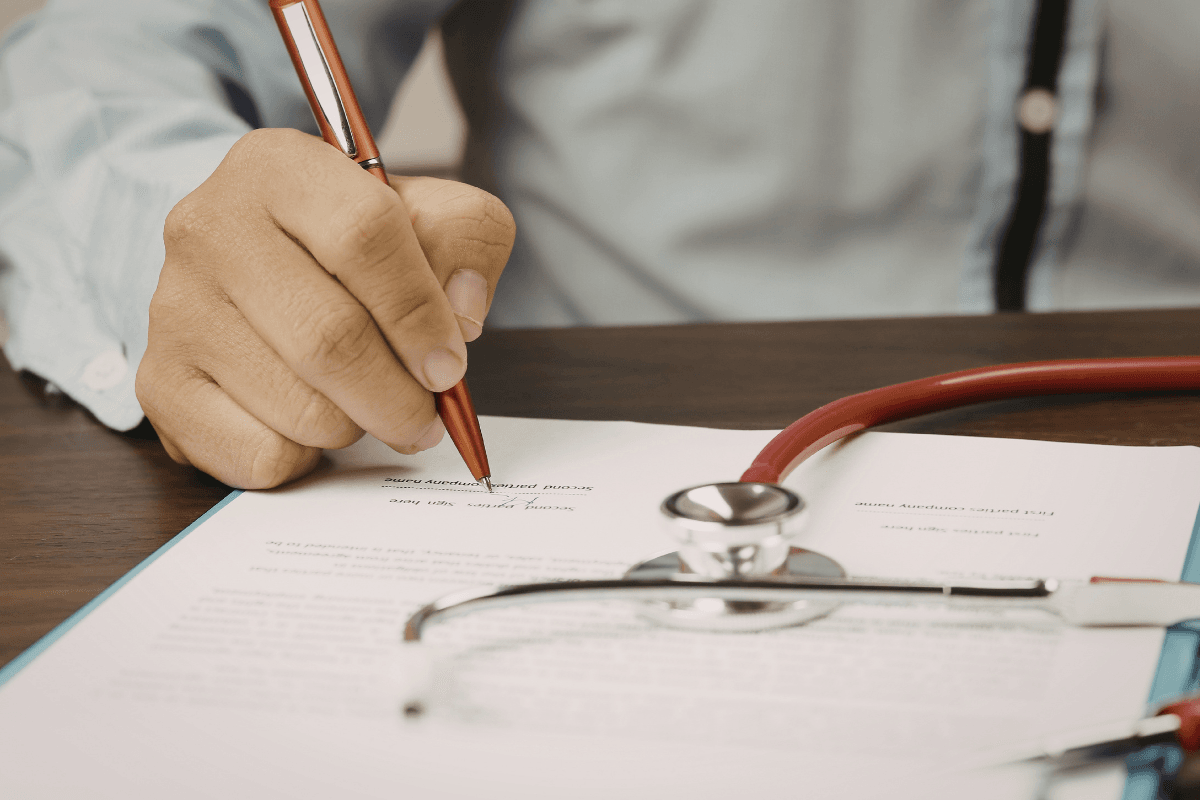

Missing work or school is stressful enough. Adding paperwork can make it worse. A doctors note can help you document an absence, explain limits, and set clear expectations for return. It also protects you from misunderstandings with managers, teachers, or attendance offices. The goal is simple: clear, honest documentation from a qualified clinician, without oversharing private details. Medispress uses a secure app built to support HIPAA-level privacy for telehealth visits.
Key Takeaways
- Purpose: Confirms evaluation and supports an absence or restriction.
- Minimum details: Dates, limits, and clinician credentials matter most.
- Privacy first: Diagnosis details are often unnecessary and sensitive.
- Avoid shortcuts: Templates are for structure, not self-filling.
- Format flexibility: Many workplaces accept PDF or portal delivery.
Overview: Doctors Note
A work or school excuse note is a short document from a licensed clinician. It typically confirms that you were evaluated and provides dates you were unable to attend. Sometimes it also lists functional limits, like “no heavy lifting” or “may need breaks.” It is not meant to prove how sick you felt. It is meant to communicate what others need to know to plan staffing, attendance, and safety.
Requirements vary a lot. Some employers want a standard form. Others only need a brief statement. Schools may request specific wording for absences, sports, or testing accommodations. In many settings, the least detail that meets the policy is best. Medispress offers telehealth visits as a flat-fee option, which can be helpful for people paying cash.
Core Concepts
What A Legitimate Note Usually Includes
A doctors note is strongest when it sticks to objective basics. Most organizations want the “who, when, and what limits” rather than a full medical story. If you need a specific form completed, bring it to the visit or upload it when scheduling. You can also ask what format your employer or school prefers, such as a PDF.
Here is what many policies look for:
| Item | Why it matters |
|---|---|
| Patient name and visit date | Shows the evaluation occurred. |
| Dates excused (or modified duties) | Clarifies when you were unable to attend. |
| Functional restrictions | Helps keep work and school activities safe. |
| Return date or follow-up plan | Sets expectations and avoids repeated requests. |
| Clinician name, credentials, and contact method | Supports verification if the policy allows it. |
| Clinic address or telehealth practice details | Shows where the care was provided. |
Common Situations That Trigger Documentation Requests
People ask for excuse documentation for many reasons. Sometimes it is for a short illness, like acute gastroenteritis (a stomach bug) or an upper respiratory infection (a common cold). Other times it follows procedures, injuries, or flares of ongoing conditions. Workplaces may also request documentation after several absences, or when safety-sensitive tasks are involved.
School needs can be different. Parents may need a note for a child’s absence, a missed exam, or a return-to-sports clearance workflow. Colleges may ask for documentation through an accessibility office. If you are unsure what is required, starting with the attendance policy can reduce back-and-forth. For broader wellness planning, the General Health hub is a helpful reference point for everyday health topics.
Privacy, Diagnosis Details, And What Employers Should Receive
Many people worry that a note will reveal too much. Often, a workplace only needs confirmation that you were evaluated and the dates or limits that apply. It is reasonable to ask the clinician to keep sensitive details out unless a specific form requires them. This is especially important for mental health and other stigmatized conditions.
Tip: If you are asked for diagnosis codes or full records, consider confirming whether a simpler certification is acceptable. Policies differ, and some requests may be broader than needed. The Generalized Anxiety Disorder Resources page can support general understanding, but only your treating clinician can document your situation. Medispress connects patients with licensed U.S. clinicians, and documentation depends on a real clinical evaluation.
Templates, PDFs, And Why “Fill-It-Yourself” Notes Backfire
Searching for a “doctor’s note template,” a “doctor’s note template Word,” or a “doctor’s note template Google Docs” is common. Templates can be useful as a checklist of what to request. They can also help you prepare the dates, job demands, and required wording before your visit. However, a template is not a substitute for an evaluation and signature from a qualified clinician.
Note: “Printable fake note” downloads and “fake note free” offers can create serious problems. They may violate workplace policy, school conduct rules, or even laws in some situations. A common giveaway is missing credentials, generic clinic names, mismatched fonts, or no way to verify the practice. If your employer requests verification, a fabricated document can escalate quickly. Medispress appointments are conducted by video, which can still support legitimate documentation when clinically appropriate.
Telehealth Versus In-Person Care For Documentation
Telehealth can work well for many straightforward documentation needs. It may be appropriate when symptoms can be evaluated reliably by history and visual assessment. It can also be helpful when travel is difficult, or when you are trying to avoid spreading illness. For other cases, an in-person exam, imaging, or testing may be needed, and a clinician may direct you to urgent care or an office visit.
Eligibility is not automatic. A clinician may decide that a note is not clinically indicated, or that more evaluation is required. That decision should be based on the assessment, not on workplace pressure. If your absence relates to recovery after a procedure, the General Anesthesia Resources page offers general context to discuss with your surgical team. Medispress clinicians make independent clinical decisions about care and documentation.
Practical Guidance
When you request a doctors note, it helps to be organized and specific. Start with the administrative question: what does your employer or school policy require? If there is a form, bring it. If the policy is unclear, ask whether they need dates only, restrictions, or a return-to-work statement. This keeps the note short and reduces the risk of sharing private information you did not intend to disclose.
Before the visit, gather a few basics. Write down your role, physical demands, and any safety concerns. Note key dates: when symptoms started, what days you missed, and when you expect to return. If you are seeking ongoing accommodations, consider whether your workplace uses an HR process separate from day-to-day attendance. Medispress uses a HIPAA-aligned app to support privacy during telehealth care.
- Confirm requirements: Dates only, restrictions, or a specific form.
- Share your work or school demands: Lifting, driving, standing, exams.
- Ask for the least detail needed: Focus on function, not diagnosis.
- Request the right format: Letterhead, PDF, or portal message.
- Plan for follow-up: If symptoms change, you may need reassessment.
Supportive self-care can reduce future absences, even when documentation rules stay the same. For practical habits, see Tips For Better Sleep Habits for sleep routines, The Benefits Of Hydration for hydration basics, and 5 Simple Ways To Reduce Stress for stress skills that may support attendance. When medication is clinically appropriate, Medispress clinicians may consider prescription options as part of care planning.
Compare & Related Topics
Not all documentation requests are the same. A simple “excuse note” usually covers a short absence. A “return-to-work” or “fitness-for-duty” note often focuses on restrictions and safety. Longer leaves can involve formal forms, such as medical certification for protected leave. Schools may have their own process for athletics, labs, or housing exceptions.
An urgent care doctors note may be the right fit when you need an in-person exam, testing, or same-day evaluation for a new issue. Telehealth may fit better when travel is difficult and the clinician can assess your situation remotely. Nutrition and lifestyle support can also matter when absences relate to chronic conditions. The Virtual Nutrition Counseling article can help you understand how telehealth is used for ongoing support, and the Telehealth category offers related education.
Documentation needs can also overlap with wellbeing goals. If you are working on routine stability, the Healthy Morning Routines guide is a practical starting point. For a preventive health lens, General Longevity provides context on long-term health planning. If prescriptions are part of a care plan, Medispress may coordinate dispensing through partner pharmacies.
Access Options Through Medispress
If you need a doctors note and you are considering telehealth, it helps to know what the process can and cannot do. A clinician still needs enough information to assess your symptoms and situation. You may be asked to share a timeline, current limitations, and any policy requirements. If an in-person exam or testing is needed, the clinician can recommend the appropriate next step.
Medispress offers video-based telehealth visits through its app, which can be convenient if you are home sick or managing transportation barriers. Many people use telehealth as a cash-pay option, often without insurance, when they need timely access to a licensed clinician. If you want to understand the general process, Telehealth Appointment explains what a visit typically involves and what information to have ready.
For prescriptions, rules differ by medication and location. Medispress can work with partner pharmacies when a prescription is clinically appropriate, and state regulations help determine what is allowed. Keeping expectations realistic can prevent frustration: the clinician’s assessment is the deciding factor, not the document request.
Authoritative Sources
Work and school policies can intersect with labor rules and disability protections. If you are dealing with formal leave paperwork, it may help to review official forms and guidance rather than relying on social media templates.
- U.S. Department of Labor FMLA forms for medical certification and leave documentation.
- EEOC guidance on disability-related inquiries for employer requests and medical information limits.
- U.S. HHS HIPAA overview for privacy concepts around health information.
A doctors note works best when it is simple, accurate, and policy-aligned. Focus on dates and functional limits, protect your privacy, and use legitimate care channels when documentation is needed.
This content is for informational purposes only and is not a substitute for professional medical advice.